
Don’t Throw Away Your Test Paper—It Could Improve Your Next Score
How to Use Every Test as a Tool to Improve Your Board Exam Performance You finish a test. You check your marks. Maybe you feel happy with the score. Maybe…



How to Use Every Test as a Tool to Improve Your Board Exam Performance You finish a test. You check your marks. Maybe you feel happy with the score. Maybe…
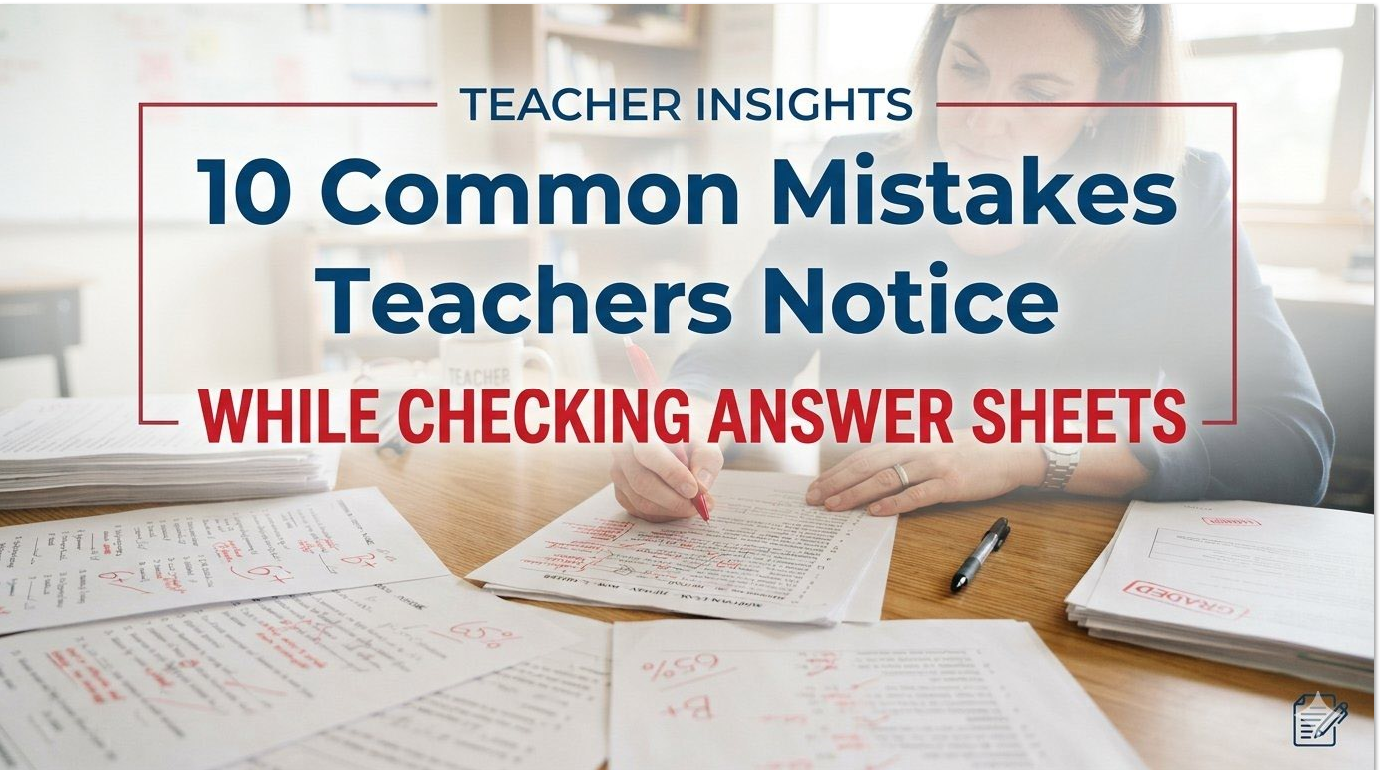
Why Correct Answers Still Lose Marks in Class 10 Board Exams A student may know the chapter, understand the concept and still lose marks in an examination. Why? Because knowing…
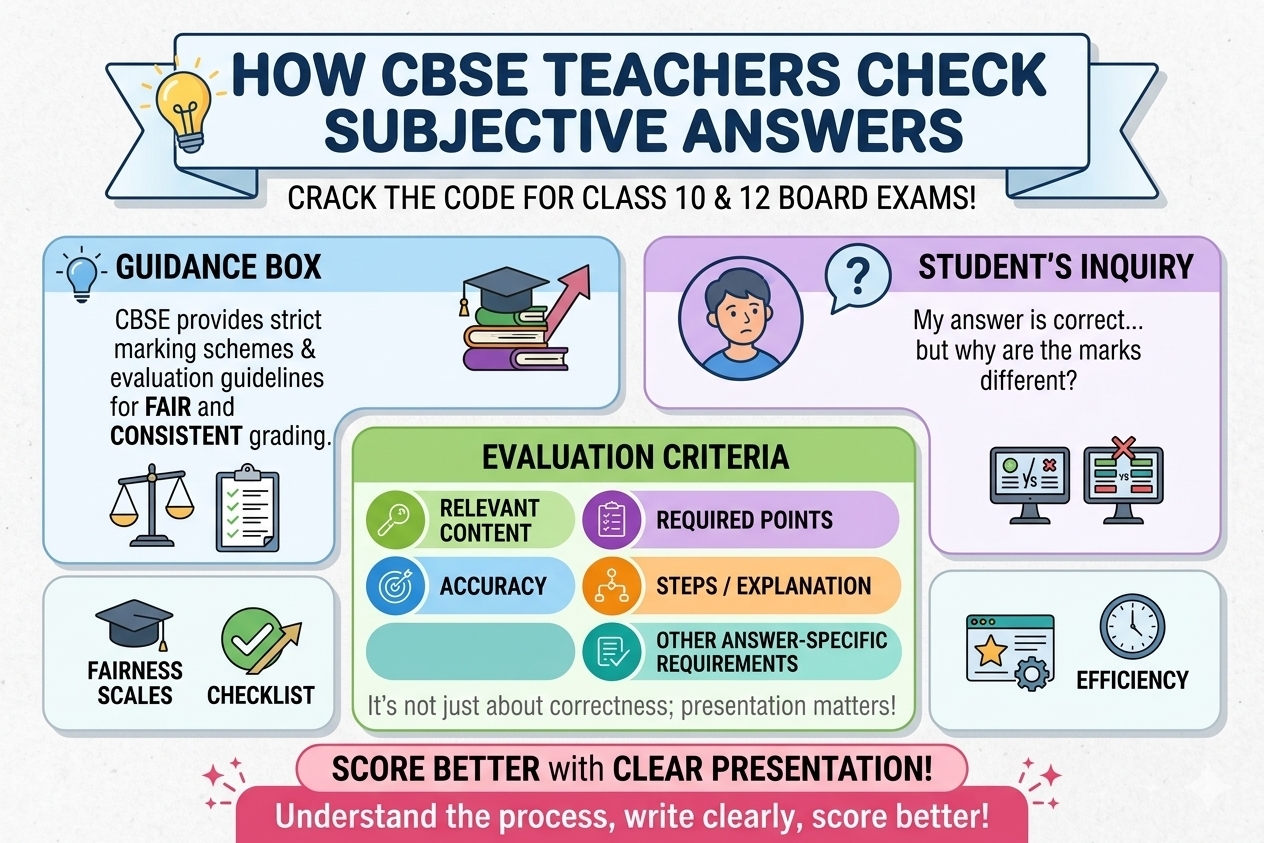
Many Class 10 students have the same question after their board examination: “If my answer is correct, how does the teacher decide how many marks I will get?” Students often…
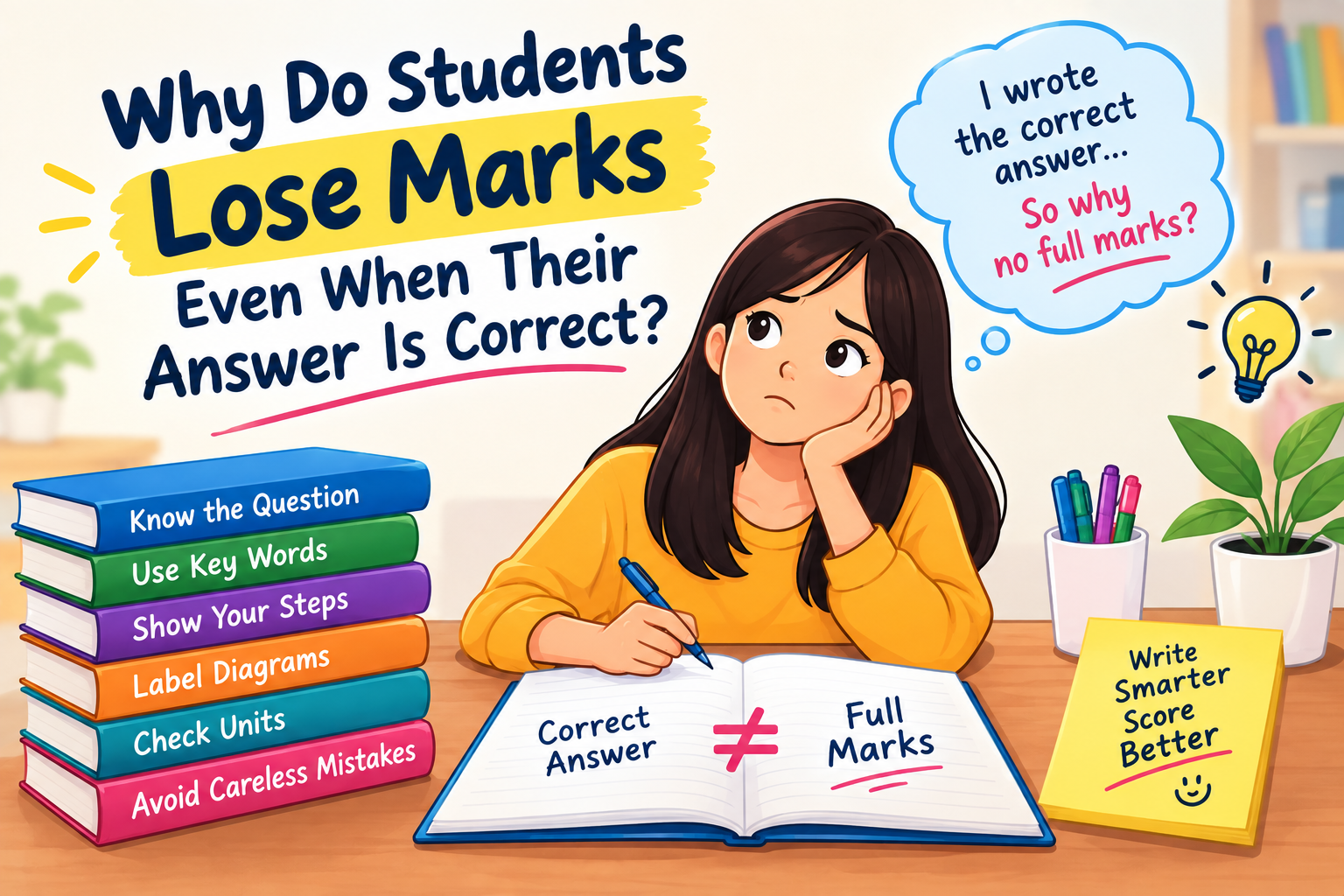
Students often feel confused after an examination when they know they wrote the correct answer but still did not receive full marks. The problem is that knowing the answer and…
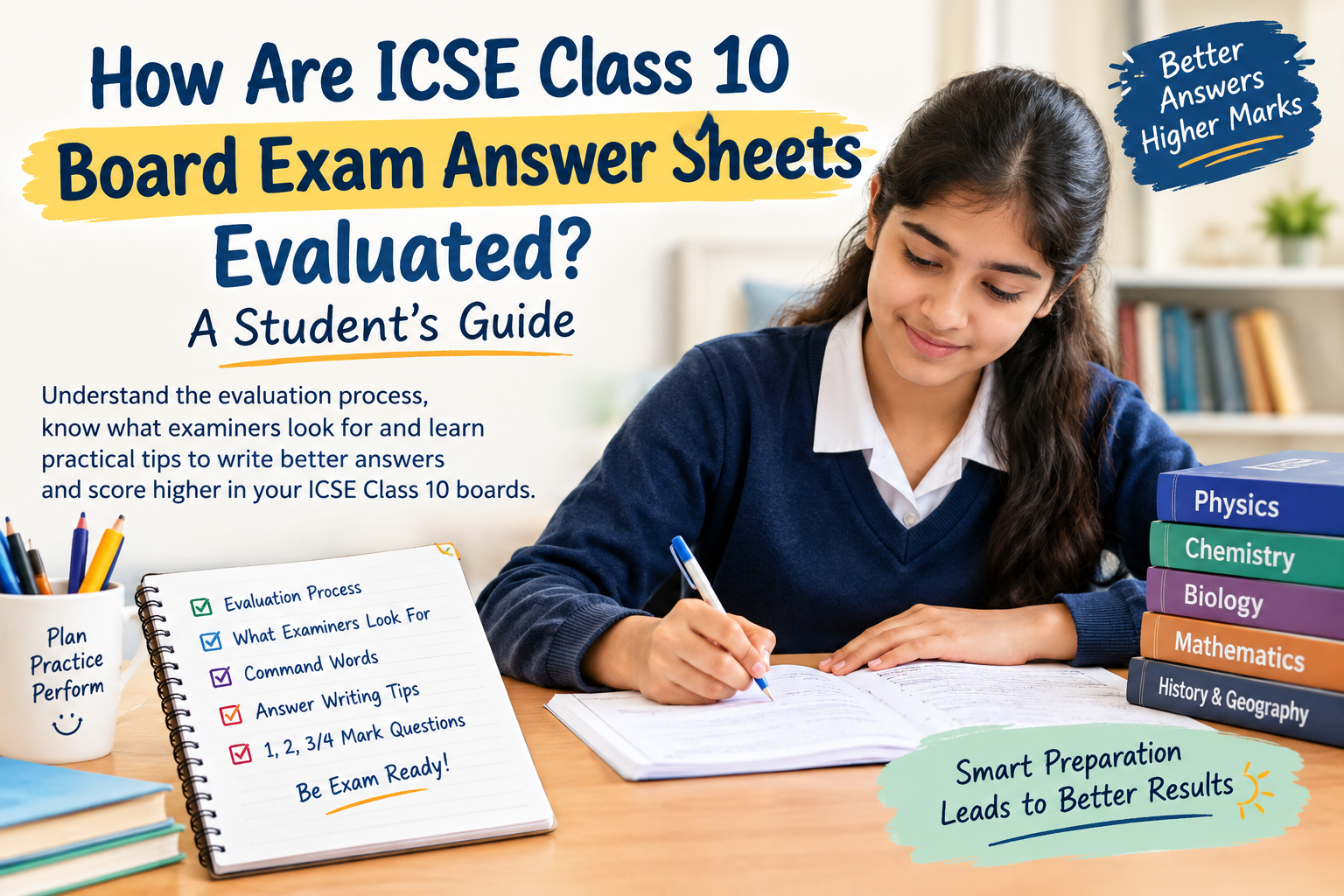
Preparing for the ICSE Class 10 board examinations is not only about completing the syllabus and memorising important topics. Students also need to understand how ICSE Class 10 answer sheets…
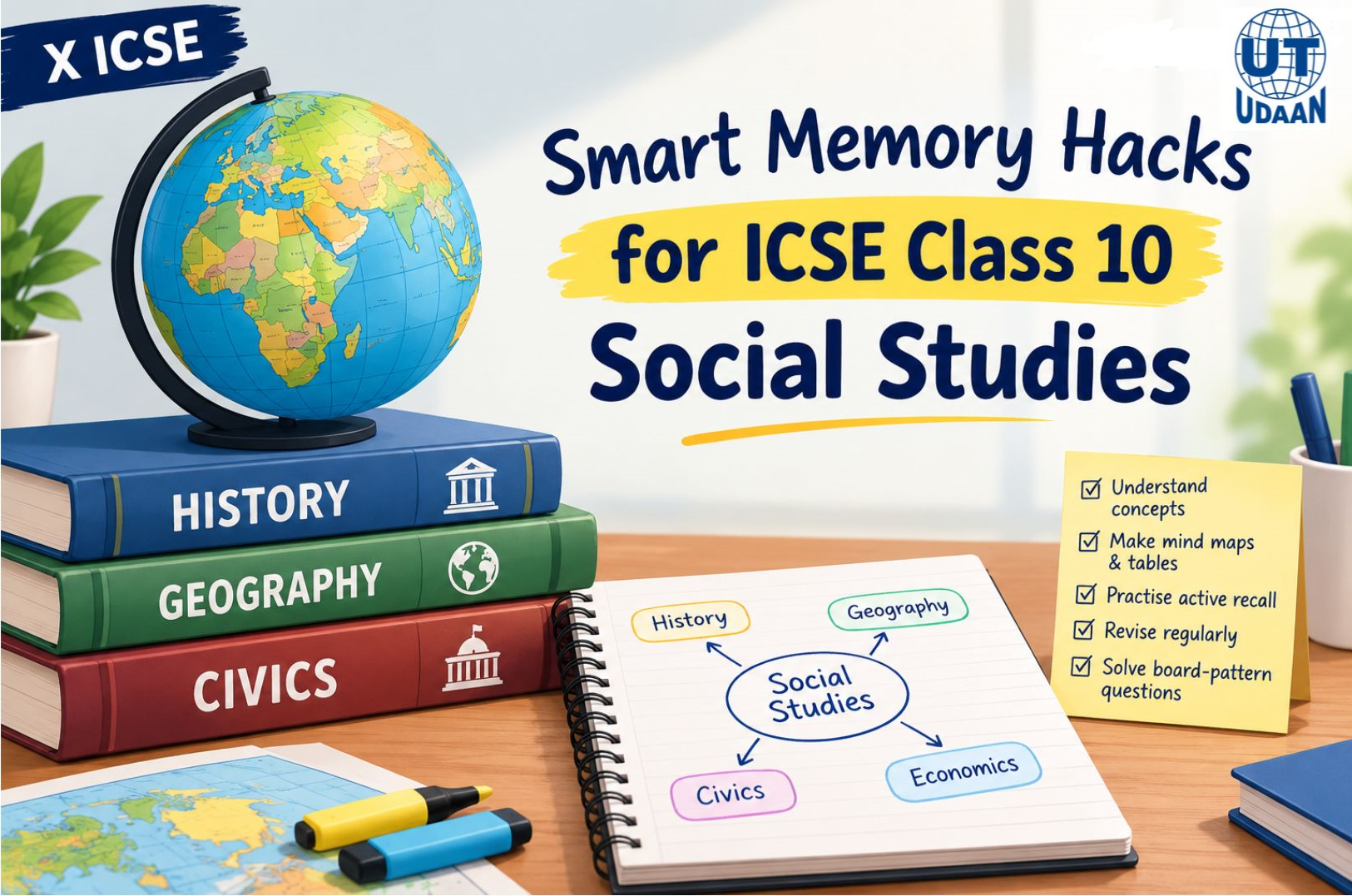
ICSE Class 10 Social Studies can feel overwhelming because it combines History, Geography, Civics and Economics, with dates, events, definitions, locations, concepts and long-answer questions to prepare. Each subject requires…
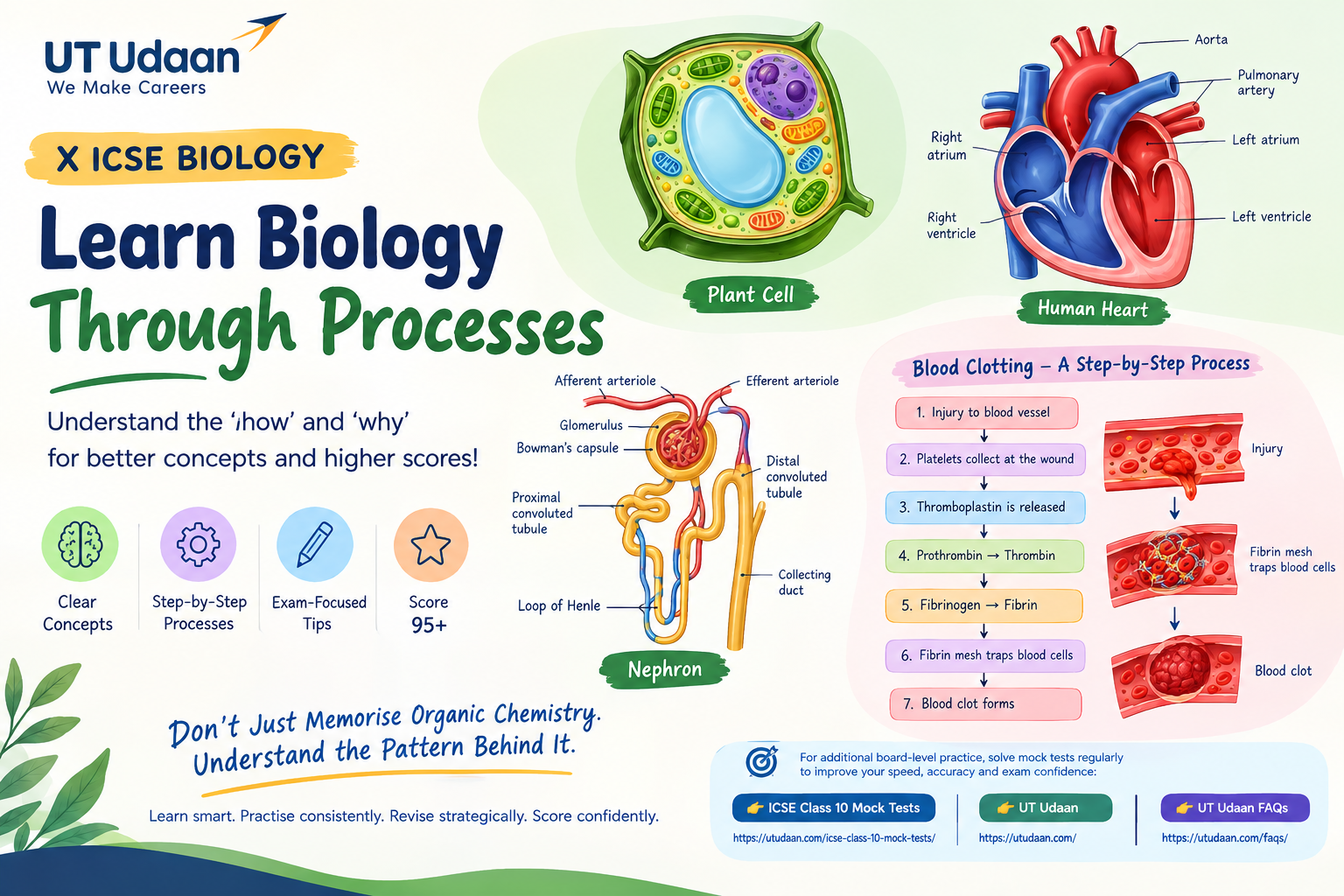
Learn smart. Practise consistently. Revise strategically. Score confidently. ICSE Class 10 Biology can be one of the highest-scoring subjects in the board exams if you prepare it with the right…
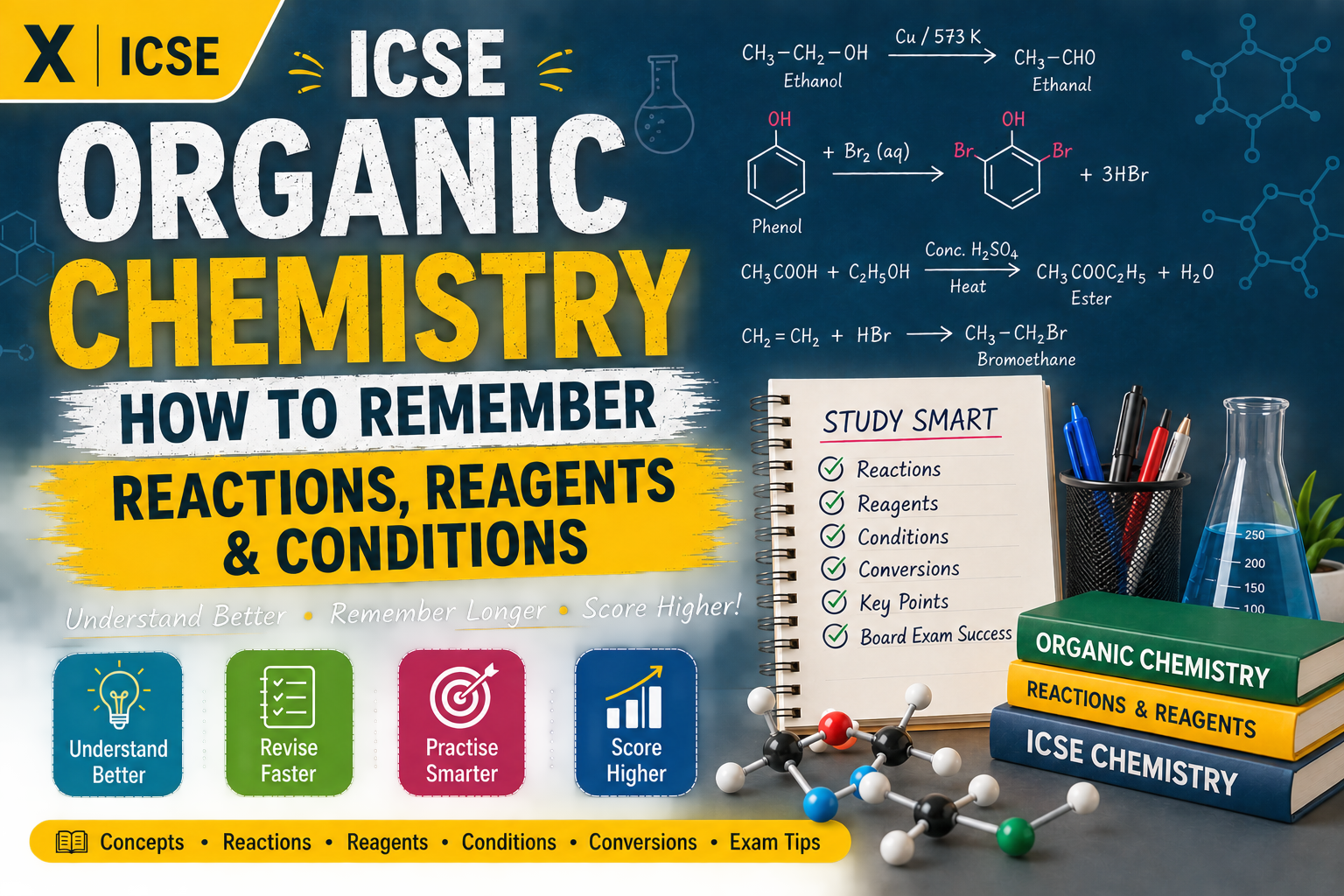
Smart Learning Techniques to Understand, Revise & Score Better in ICSE Chemistry Organic Chemistry can seem difficult at first. There are chemical reactions, functional groups, equations, properties, conversions, conditions, and…
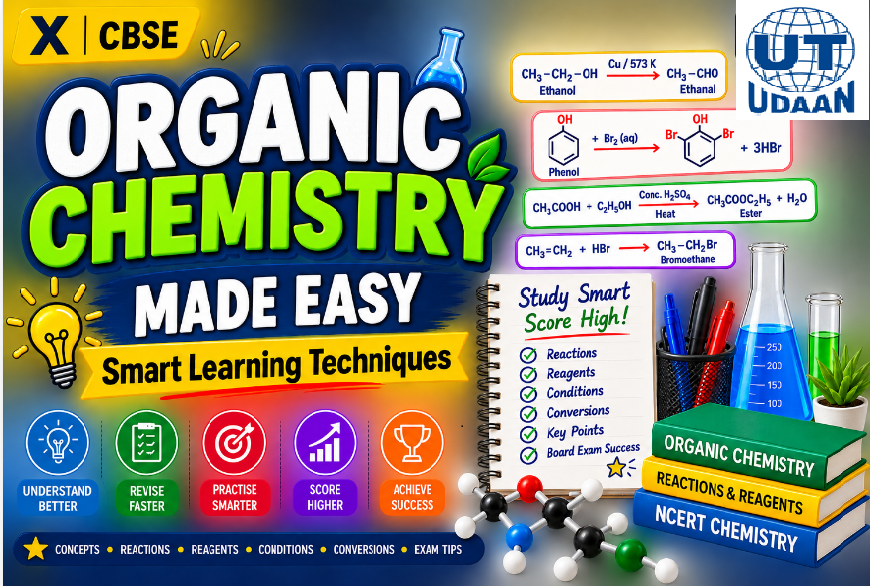
Organic Chemistry often feels difficult because there are too many reactions, formulas, and exceptions to remember. But does learning Organic Chemistry really mean memorising hundreds of reactions?
Absolutely not!
With the right Organic Chemistry study techniques, you can understand reactions logically, remember important concepts for longer, and solve exam questions with greater confidence.
The key is to focus on conceptual understanding, reaction patterns, functional groups, active recall, and regular practice rather than relying entirely on rote memorisation.
Whether you are preparing for CBSE Board Exams these smart learning techniques can help make Organic Chemistry simpler and more manageable.
One of the biggest reasons students struggle with Organic Chemistry is that they try to study every reaction as an independent fact.
For example, students often remember: Reactant + Reagent → Product
But if the question changes the reactant, reagent, or reaction conditions, they may not know what to do. Instead, train yourself to ask:
What functional group is present?
What does the reagent do?
What type of reaction is taking place?
Why is this product formed?
This approach changes Organic Chemistry from a memorisation-heavy subject into a logical and pattern-based subject.
Before studying complex Organic Chemistry reactions, make sure your basic concepts are clear.
Important topics include:
Do not spend hours memorising reactions if you are still confused about electrophiles, nucleophiles, resonance, or electronic effects.
Strengthen the fundamentals first. Once the concepts are clear, many reactions become much easier to understand.
One of the best ways to organise your Organic Chemistry preparation is to study compounds according to their functional groups.
For example:
Once you identify the functional group, it becomes easier to predict the types of reactions the compound can undergo.
A reaction map is an excellent tool for Organic Chemistry revision.
Instead of writing reactions as unrelated points, connect them to understand how one compound can be converted into another.
For example: Alkene → Alcohol → Aldehyde/Ketone → Carboxylic Acid
Reaction maps help you:
Keep your reaction map updated as you complete each chapter. Before an examination, you can use it for a quick Organic Chemistry revision instead of going through every page of your textbook.
Memorising a long list of reagents can make Organic Chemistry confusing. Instead of simply remembering:
Reactant + Reagent → Product
ask: “What does this reagent do?”
A reagent may:
Once you understand the function of a reagent, remembering the reaction becomes much easier.
Instead of memorising every reaction individually, group reactions into categories.
Atoms or groups are added to a molecule, commonly across a multiple bond.
One atom or functional group is replaced by another.
The oxidation state of the carbon framework increases, often involving oxygen addition or hydrogen removal depending on the reaction.
The oxidation state decreases, often involving hydrogen addition or oxygen removal.
Understanding these broad patterns makes it easier to recognise unfamiliar reactions.
Maintain a dedicated Organic Chemistry reaction notebook.
For every important reaction, record:
| Reactant | Reagent/Condition | Product | Reaction Type |
| Reactant | Reagent | Product | Addition / Substitution / etc. |
You can also add a fifth column: Important Point / Exception
This makes your Organic Chemistry revision notes concise and easy to review before tests.
Whenever you learn a new reaction, follow these three steps.
This technique is much more effective than repeatedly reading the same reaction.
Conversion questions are an excellent way to test your understanding.
For example: A → B
Ask yourself:
Start with simple conversions and gradually move towards multi-step conversions.
Regular practice of organic conversions can significantly improve your confidence in exam questions.
Named reactions are an important part of Organic Chemistry preparation.
However, do not learn only the names. For each important named reaction, remember:
Name → Reactants → Reagent/Condition → Product → Key Feature
Create a separate Named Reactions Chart for quick revision.
This makes last-minute preparation much easier.
Organic Chemistry contains several important rules and exceptions.
Instead of allowing these exceptions to become confusing, maintain a separate section in your notebook: Organic Chemistry Exceptions
Whenever you come across an important exception, add it to the list.
Revise this section regularly, especially before examinations.
For CBSE Chemistry board preparation, NCERT is an essential resource.
Do not simply read the chapters from beginning to end.
Pay special attention to:
After completing a topic, close the book and try to reproduce the important reactions and concepts from memory.
This combines NCERT study with active recall, making your preparation more effective.
One of the most common mistakes students make is passive reading. Reading a reaction repeatedly does not guarantee that you will remember it during the examination.
Instead, use active recall.
For example:
Read: Alcohol → Aldehyde
Then close your book and ask: Alcohol — ? → Aldehyde
Try to recall the reagent without looking at your notes.
Then check your answer.
This simple technique helps strengthen your memory and improves reaction recall.
Organic Chemistry improves through problem-solving, not just reading. Even 20–30 minutes of daily practice can make a difference.
Practise different question types such as:
The goal is not simply to solve more questions.
The goal is to understand why your answer is correct or incorrect.
An error book can become one of your most valuable revision tools.
Whenever you make a mistake, record:
Question → My Mistake → Correct Concept → How to Avoid It
For example:
Mistake: Used the wrong reagent in a conversion.
Reason: Confused an oxidation reaction with a reduction reaction.
Correction: Revise the functions of important oxidising and reducing agents.
Before every test, revise your error book.
Your mistakes can become your personal revision guide.
Organic Chemistry can become overwhelming when you attempt to complete an entire chapter in one sitting.
Break your preparation into smaller targets. Example 6-Day Organic Chemistry Plan
Day 1: Basic concepts
Day 2: Functional groups
Day 3: Important reactions
Day 4: Organic conversions
Day 5: NCERT questions and previous-year questions
Day 6: Mock test + error analysis
Small, consistent study sessions are generally more effective than last-minute cramming.
Don’t try to memorise every reaction as a separate equation. Instead, remember each reaction using this 4-step method:
Ask: What am I starting with?
For example: Ethane → Ethene → Ethanol → Ethanoic acid
focus on the transformation:
Create a simple connection between the reaction and its reagent or condition. Instead of memorising isolated chemicals, learn:
A Simple Memory Formula
START → CHANGE → REAGENT → CONDITION → PRODUCT
This method helps students remember not only the reaction but also which reagent and condition should be written in the board examination.
Use this simple cycle: Understand → Organise → Recall → Practise → Analyse → Revise
Mistakes That Can Cost You Marks
❌ Memorising reactions without understanding
Better approach: Understand the reaction pattern and purpose of the reagent.
❌ Studying reagents randomly
Better approach: Group reagents according to their functions.
❌ Only reading notes
Better approach: Use active recall and regular question practice.
❌ Leaving conversions until the end
Better approach: Practise conversions throughout your preparation.
❌ Not analysing mistakes
Better approach: Maintain an error book and revise it regularly.