How to Score Top Marks in CBSE Class 10 Board Exams: 10 Proven Strategies
Scoring 90% or above in the CBSE Class 10 Board Exams is not just about studying harder—it’s about studying smarter. Every year, thousands of students achieve outstanding results by following a disciplined study plan, practicing regularly, and avoiding common mistakes.
If you’re preparing for the CBSE Class 10 Board Exams, these 10 proven strategies can help you maximize your score.
1. Master the NCERT Textbooks
NCERT is the foundation of CBSE Board Exams. Most questions are directly or indirectly based on NCERT concepts.
Before referring to guidebooks, ensure you:
-
Read every chapter thoroughly.
-
Solve all exercise questions.
-
Understand examples and diagrams.
-
Revise NCERT multiple times.
2. Follow a Realistic Study Timetable
Create a timetable that includes:
-
School revision
-
Daily practice
-
Weekly revision
-
Mock tests
-
Short breaks
Consistency is more important than studying for long hours.
3. Practice Answer Writing Every Week
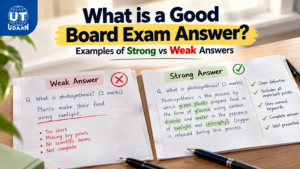
CBSE exams test your ability to explain concepts clearly.
Practice:
-
Short answers
-
Long answers
-
Numerical problems
-
Diagrams
-
Case-based questions
Writing regularly improves speed and presentation.
4. Solve Previous Years’ Question Papers
Previous papers help you understand:
Solve papers within the actual exam duration.
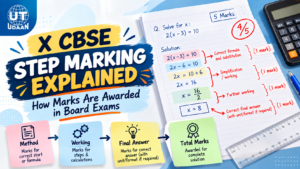
5. Learn the CBSE Marking Scheme
Understanding how marks are awarded helps you write examiner-friendly answers.
Always:
-
Use keywords.
-
Write point-wise answers.
-
Draw labelled diagrams where required.
-
Underline important terms.
6. Revise Regularly
Revision is the key to long-term memory.
Follow this simple cycle:
7. Improve Presentation
A neat answer sheet is easier to evaluate.
Maintain:
Good presentation helps avoid unnecessary loss of marks.
8. Learn from Your Mistakes
After every test:
Continuous improvement leads to better scores.
9. Practice Through Chapter-wise and Full Syllabus Tests
Reading alone is not enough.
Regular testing helps students:
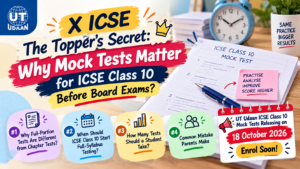
A structured CBSE Board Test Series with chapter-wise tests, full syllabus mock papers, teacher evaluation, and model answers allows students to track their progress and continuously improve before the final board exam.
10. Stay Healthy and Confident
Good preparation also requires:
-
7–8 hours of sleep
-
Healthy meals
-
Regular breaks
-
Limited screen time
-
Positive mindset
A fresh mind performs much better during exams.
Final Thoughts
Scoring top marks in the CBSE Class 10 Board Exams is possible for every student who studies consistently, practices answer writing, solves previous years’ papers, and learns from teacher feedback.
Remember, success isn’t about studying the longest—it’s about practicing the smartest.
FAQs
Is NCERT enough for CBSE Class 10 Boards?
Yes. NCERT is the most important resource and should be thoroughly completed before using additional books.
How many previous papers should I solve?
Aim to solve at least 5–10 full-length papers under exam conditions.
How important is answer writing?
Very important. Good presentation and proper structure can significantly improve your score.
Should I take mock tests?
Yes. Chapter-wise and full syllabus mock tests help improve confidence, speed, and exam readiness.